condencity_44 double city


Seoul's double identity is both hidden and exposed simultaneously. Underground corridors extend invisibly (from the city streets above) for blocks, connecting subway riders from sidewalk destinations to subway trains below ground. Lengthy tunnels match length for length sidewalks and streets at ground level. Curiously, few corridors as this are so sparsely populated leaving destination above in questionable limbo until the moment of arrival when emerging into city light.


condencity_43 urban memory


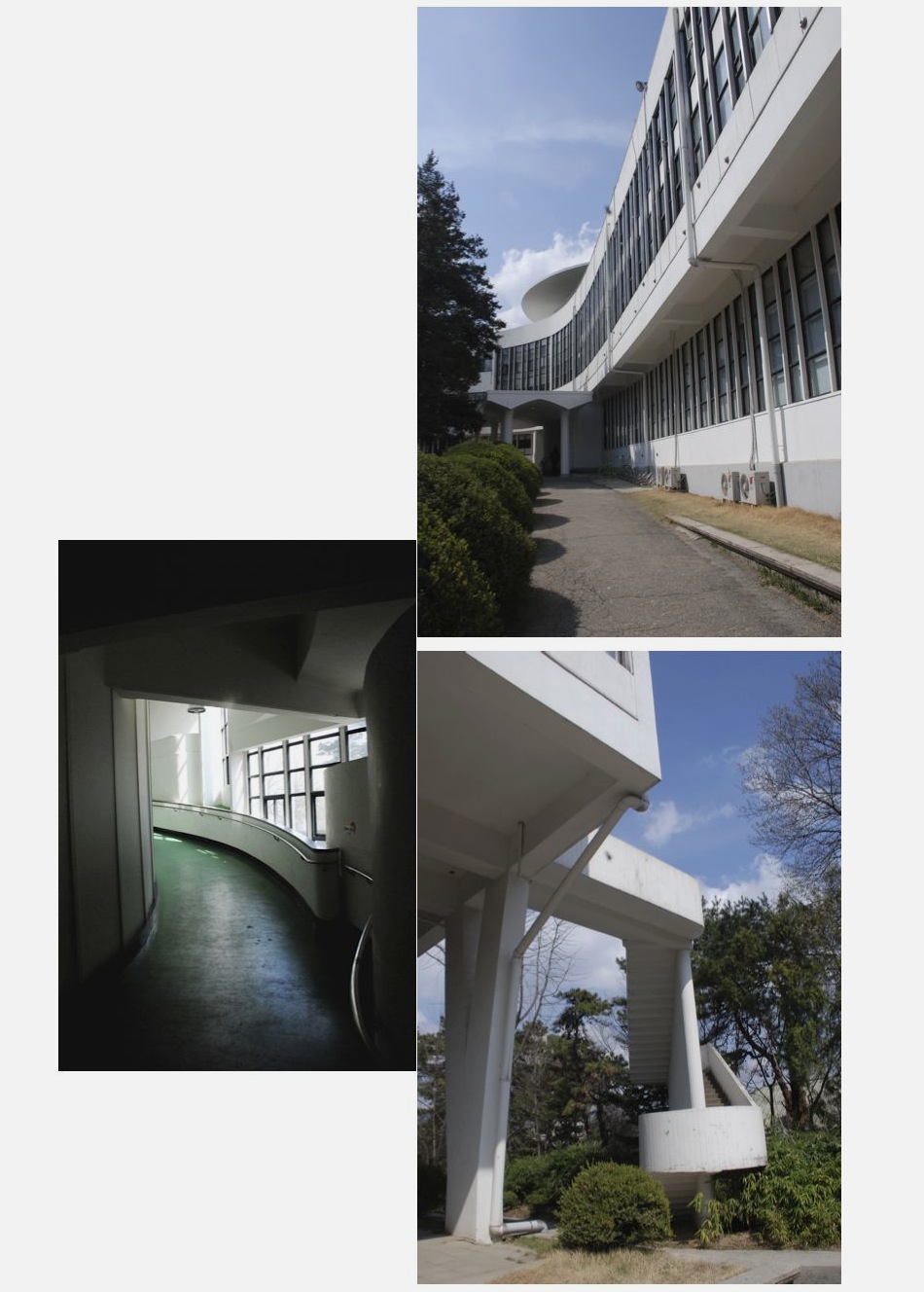
The highest topographical elevation on the Konkuk University campus in Seoul is punctuated with an oddly curious building, projecting an aesthetic and form caught somewhere between Corbusian modern and Eastern Block socialist architecture of the 1960's. The designing Korean architect in fact had studied briefly under Le Corbusier and was undoubtedly influenced in the outcome of what stands today. The building functions now as the campus' foreign language institute but in the recent past served as the school's main library. 

It's exterior white-washed walls have recorded seasonal time with weathered streaks and accumulated dust. The interior, while dated opposite outside, has recently undergone a fresh coat of refurbishment. Painted corridors and newly tiled floors attempt to conceal time. As I moved around the central, spiraling corridor I can't help but remember the long extended corridors of the communist panel-laks of Eastern Europe. Clouded windows, with the collected haze of season's and lives past to my right, mysteriously concealed, oblique spaces to my left; urban memory and the making of myths. 


Condencity_42 long city


Saewoon Sanga during the 1970's


The birth of modern architecture in Seoul was in part initiated by the construction of Saewoon Sanga in the mid 1960s. It's construction erased a half century of contentious urban 'vacancy' and representation. In the early 20th century a 1km strip of land was cleared by Japanese Colonial occupation and served as a fire break in the city during war time. After the Korean War, new urban settlers quickly constructed shanty villages and the area became known as the cities red light district. Rapid post war reconstruction of Seoul and a growing economy, fueled a burgeoning electronics industry and instigated needs for a larger modern market place. 

The vision for Saewoon Sanga by renowned Korean architect Kim Swoo Geun and city officials was thus an unprecedented mega-mixed use project of electronics commerce, educational and residential spaces, stretching the entire 1km. The ambitions of the project, while never fully materializing in diversity of mixed-use functions, did become the cities largest electronics market and most desirable residential address. Home to movie stars and corporate CEO's it's vibrant climax was quickly overcome by subsequent residential and electronics markets in other parts of Seoul. What has become today is a marginalized market of working class dwellers struggling to survive amidst a city that has quickly surpassed (and left behind) the advancements of what Saewoon Sanga once represented. 

Today, the mega-structure stands silently the same as it has for the past 45 years. Virtually unchanged and in disrepair its fate to demolition cranes apparently decided by the city of Seoul. This stretch of concrete form will once again become 'empty' as in urban park, dispersing its commercial tenants and residents of decades to other hidden corners of the city. It appears an un-thoughtfully simple solution for such a complex and fascinating place, to completely demolish the birth place of 'modern' in Seoul.


Condencity_41 dead ends


Night and day are reversed in the dead-end corners of Seoul. The sky exists as a night like grey metal cover with cool fluorescent eye-burning light. Just above, the day shines bright without notice. Narrow alleys pinch to shoulder width and terminate in shuttered doors. Boundaries of public and private space blur in obscurity and the chance to move forward is met with hesitation. Seoul's pulse are back alleys of work and mystery. 

Their presence, while here today appears to be something bordering the obsolete. As modernization of this city continues such curious roads are being raised and replaced with sterile glass towers. This road too has a finite future. In one form or another it will persist in our memories and imagination.


Seoul formless 2.2


Recently I have begun writing and researching about urban 'adaptations'. The economic machine of Seoul on a micro scale is evidence enough of how adaptable the generic office 'box' can be. With little regard for form or context the commercial shop adapts to any building location. Small spaces at the street front regularly appear and dissappear with the ebb and flo of economics. In return the street and city at large are constantly changed at face value.  Color, material and light exist apart from the building in which they are fashioned to.


Condencity_40 slim


San Francisco is attractively slim. It's the narrow lots wedged into city gaps and my memory that make it un-American; slim. Zero lot lines squeeze in to a nearly 'zero lot'. City often surprises us most when it reveals the least. An efficient use of space leaves much to the imagination. Stairs, Elevator, could it all be there?  The memory of yesterday simply exists for what is possible today. 


Condencity_39 Beige


Returning to the scene of the crime, I recently made a brief appearance in San Francisco. From a new perspective at the 17th floor the city is not what I remember. I remember a 4th floor lifestyle from my apartment and office. Rarely did I go outside of that vantage point of the city.  17 was new for me and a reminder of how 'beige' San Francisco is. Cast against a cloud strewn blue sky and the occasional colored tower, the city exists banal in a colorless resistance. Variable identity is manifest only through ornament and time dependent details.


Beige gives way sirens and horns from below that remind me of a return home. San Francisco, frozen in its time remains as it always has. 


Seoul Formless_2.1


With each step we experience the rise and fall of Seoul's urban topography. The city is shaped by contours, viewed  through pedestrian spaces of yesterday and today. Links between here and there are captured in laborious step and breath. With few exceptions the architecture and buildings that dress these slopes do so in clustered masses of indeterminate form; hillsides are blanketed with irregularity and density.

The city is experienced in actions. Carefully aware of the irregular rise from step to step, one is reminded of natures imperfections and the city as a place of formless possibility to mirror that of nature. 


Seoul Formless_2


Image reference SDI, 1961

Topography is at the heart of Korean consciousness and life. In a country more than 70% mountainous it is the lay of land that is a constant force against building, dwelling and urban form. In the recent past as seen in the image above from 1961, illegal villages and districts of Seoul were constructed in less than desirable locations, often to avoid inspection and notice from city officials. The results of which were meandering clusters on steep terrain, isolated and removed from the cities center.
Many such places have long disappeared but remain as documented reminders of how city and land form combine. Improvisation and necessity intertwined, rendering the city formless.


Seoul Formless


Old and new collide in Seoul's layered core. Service industry and corporate interests shape the cities inner block structure where makeshift buildings and office towers stand side by side in contrasting function. The result is formless whereby urban organization dissolves in fragments. Order and structure give way to dissorder and a patchwork of  yesterday and today.

The cities evolution couldn't be more clear in intersections such as these. At once time appears frozen in reflections of foundational industry and how these places established Seoul as a major urban center. The city around such places continues to evolve quickly in speculative transformations. The combination of these two conditions creates a complex and formless identity.