open invitation_ 2012.02.20


GSAKU workshop. College of Architecture- Konkuk. 


Lautner's LA


photos-ereeder 2000


It was no secret that John Lautner was appalled by LA's appearance. He once commented that he wondered how anyone could have created such a dreadful environment. Yet, through his unrecognized, albeit maturing career Lautner made LA home. And he made it an impressionable 'home' for the fortunate clients to have commissioned his work to design their domestic retreats. It has been more recently that his life's achievements have come to light in the eyes of the architecture community however, few architects even today, can measure in spatial experience, what Lautner was able to accomplish in his time- sans computational tools.

It was early 2000 when I visited the only Lautner residence I have ever seen. It is is perhaps one of the most memorable architectural experiences of my life, having the rare opportunity to step foot inside of his Sheats-Goldstein Residence in the Hollywood Hills of Los Angeles. Our small group was invited on that bright Los Angeles afternoon, with late day sun casting deep shadows. I remember clearly upon arrival, the house had no distinctive point of entry- it appeared camouflaged within the heavily forested hillside. Unlike so much architecture, predisposed to what that first image represents in style or form. Lautner's residence, on the other hand, was about succumbing to the dense landscape of the steeply sloped hillside- the facade, a series of low, interrupted walls defining the entry, was nearly invisible in a disguise to make environment the forefront spectacle.

It is interesting to recall such experiences from distant years. In part because the mental reconstruction is  inaccurate to a large extent, slanted to a personal bias and honed to what the senses reveal in ones memory. I re-create my visit in words, searching for description of loosely connected spaces- each segmented room experientially independent from the previous in generously specific attempts to connect indoor living with the outdoor forests and distant city skyline. And so it was, the house that pulled you into its folded entry, disguised in obscurity, appearing determined in its interior-exterior play. Was it inside or outside that we crossed into the vaulted living area? Affixed with permanent furniture- a space appearing of a futuristic tomorrow, ironically conceived in years past with it's vast concrete ceiling capturing sky and directing shadows. Infinity floor, looking to city skyline, I wandered to the edge of Lautner's LA.


condenCITY_88 forgotten cities


798 Beijing, China


Industry represents the seeded beginning (and inversely at times, the cataclysmic end) of a cities life. As we look into the 'The Forgetting Machine: Notes Toward a History of Detroit'- definitely worth reading by the way- in regards to the industrial miscue of what Detroit, Michigan has become. 

Not everywhere though are places, so defined by industry, as ill-fated or so forgotten. Shouldn't we in the very least hold ourselves accountable for the invariable damage inflicted upon the very environments of such places? Remembering must therefor be part of the equation. 

Remembering must overcome how we have chosen to forget. 


condenCITY_87 south of somewhere


Beige
caught between sky
and building
vacancy

Where manufactured lives

and packaged dreams
Assembled
In production like
Perfection
Weight rises
and always falls

Here time
is covered
In atypical fashion

South of somewhere


Vaclav's Prague_ 1936-2011


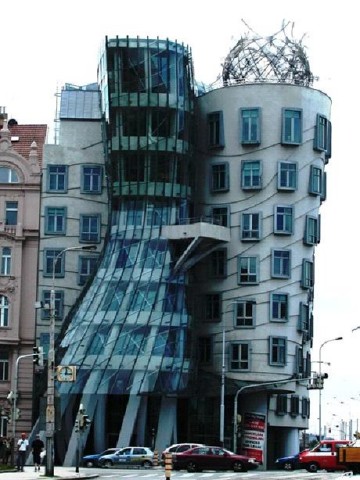
Frank Gehry's Fred and Ginger Building 1997, Prague, Czech Republic


A revolution led by written word (and architecture). 

The late Czech leader and galvanizing visionary, Vaclav Havel led the peaceful uprising Prague spring and 'Velvet Revolution' of 1989. Mr. Havel, with wit and poetics of word, stirred discontent through the foundations of Charter 77, a human rights watch group that brought attention to the abuses of perverse power, corruption and other atrocities under communist oppression. His imprisonments fed his frustrations further and inspired revolutionary ideas and words which would propel a people to freedom in 1989 and into the early 90's as he was elected Czechoslovakia's first democratic leader. 

It was during his time as President of the newly formed Czech Republic (after the split with Slovakia) that Prague emerged in the eyes of the world as a city unparalleled in a well preserved, cross-section of historical identity through time. The rebirth of ideology (and the city itself) was perhaps exemplified in a new architectural project to be situated adjacent an apartment building designed by Mr. Vaclav's grandfather in 1907- and a place Mr. Havel once lived. Having secured the rising star in Frank Gehry back in the early 1990's, the design of the 'Fred and Ginger Building', on this prominent river front site, represented a fresh start for the fledgling democratic country. If there ever was an architecture embodying political change it is here along the Vltava River in Prague, instigated by none other than Mr. Havel himself. 

Mr. Havel can be credited with with both preservation and progress in Prague and in the Czech Republic. Absolved of militarism, with pen in hand, creatively writing social change. 

He will be remembered.


condenCITY_86 commute


About three years ago, I posted sequential images and descriptive words relating to my daily commute in San Francisco. In actuality, I had 5 years prior to that, done the same thing in Seoul back in 2001, tracing my daily route to work on cold winter mornings. Now, almost ten years ago to the day, I reflect upon my daily commutes that I made from Anguk-dong to Yeoksam-dong in Seoul. The original commute images were shot in 35 mm slide film that has since been scanned to digital format as you see here now. Even in 2001, Seoul in its tattered youth and engineered front, appears design-less; awkward in adolescence as a growing and changing city. In that respect, not much has changed to this day.

'Commute' has always had significance in my daily routines. On foot or via public transit, my routes have shifted by mood or of necessary expediency. Always varying, even in the slightest of deviation or shifts in step. Our awareness is heightened in tactile contact. Ground against foot, Feet on moving platforms; the camera at one's side, as a mechanism for recording time and distance.  

Eyes open and mind wandering, wondering.


condenCITY_85


Visions of Nakwon

The belly of a city, turned upside-down in the darkness of day.
Where some explore, others remain cautiously aside;
outside.
Both road and structure conceived simultaneously;
a partnership of economics and an expedient double time.
My memory is vague but bold as I look back through my forlorn window.


condenCITY_84 above and below


Faux-fotos capturing real "insta"-moments. I have begun to photograph Seoul above and below ground in a series of images, quickly capturing the reflected half of the city; a metro system, experienced daily by thousands and yet receiving little attention as a place of destination- or perhaps even consideration as active public space. The Seoul metro is a place of passage where most commuters rarely take pause. The series can be seen here at an instagram platform for viewing and sharing photo's, captured on handheld, mobile devices and networks.


condenCITY_83 cities in-between


The Kaesong Industrial park in North Korea is located 16 kilometers north of the DMZ and South Korean borders. Kaesong, having opened in 2004 as a joint project between the north and south, now operates as a conditional industrial 'experiment' with productions of low-quality garments and commercial products owned by South Korean companies and with labor supplied at the hands of North Korean workers. Currently more than 40,000 workers populate the park with plans for more than double that over the next decade.

The industrial city is directly connected by train and bus to and from Seoul, making it the only active civilian link, between the two countries along the heavily fortified DMZ- although for the moment, visits by the general public have been halted due to rising political tensions. It is a place of transient existence, with a workforce shipped in for operations and then out when the factories close. It remains caught in-between, somewhere as typical industrial area, and yet suppressed by the decades old cold war stalemate still gripping the peninsula. 

But could Kaesong be a staging ground for more? 

Kaesong presents the possibility of industrialization as a uniting force of disparate ideologies; bridging lapses and filling decades of void. It has become a delicate dance of divergent economics- precariously positioned as a model for unity in the oddest of ways. 


condenCITY_82 city depths


The depths of a city can be measured in anticipation; what may or may not eventually happen as a result of environmental oversight. In the case of Seoul, the engineered Han River, is a subtle measure of the city's depth. The negative elevations of which, have been excavated away, as a precautionary stance ensuring the safety of its citizens and investments. As contingency this city is intentionally deep.